
This guide explains how experienced buyers compare replica watch quality beyond marketing labels. It focuses on the details that can be examined before ordering, the claims that should be treated cautiously and the qualities that make the greatest difference during everyday wear.
Begin with the Purpose of the Watch
The most useful comparison starts before examining materials or movements. Buyers should first decide how the watch will actually be used.
A watch intended for occasional evening wear has different requirements from one expected to handle commuting, travel and daily office use. Likewise, a complicated chronograph may be visually appealing, but it may not be the most practical option for someone who values simple servicing and consistent performance.
Before comparing individual models, consider four questions:
- Will the watch be worn every day or only occasionally?
- Is visual similarity more important than mechanical simplicity?
- Does the buyer prefer a sports bracelet, leather strap or integrated design?
- Will the watch be exposed to rain, travel, physical activity or frequent temperature changes?
These questions help narrow the search. A daily-wear buyer may reasonably prioritise movement stability, bracelet comfort and straightforward functions. A collector studying a particular reference may place more emphasis on dial details, case geometry and visual accuracy.
There is no single definition of the best replica watch. Quality must be judged against the intended use.
Case Shape Matters More Than the Steel Specification
Material descriptions often dominate product listings. Terms such as 904L stainless steel, polished ceramic and scratch-resistant coatings may sound reassuring, but the way those materials are shaped and finished matters just as much as the material itself.
Experienced buyers examine the complete case profile. Important details include:
- Overall case thickness
- Lug length and curvature
- Crown-guard proportions
- Transitions between brushed and polished surfaces
- Bezel height in relation to the crystal
- The position of the case back against the wrist
A case can use an impressive steel specification and still look incorrect if the lugs are too thick, the shoulders are overly rounded or the polishing removes the sharp transitions that define the original design.
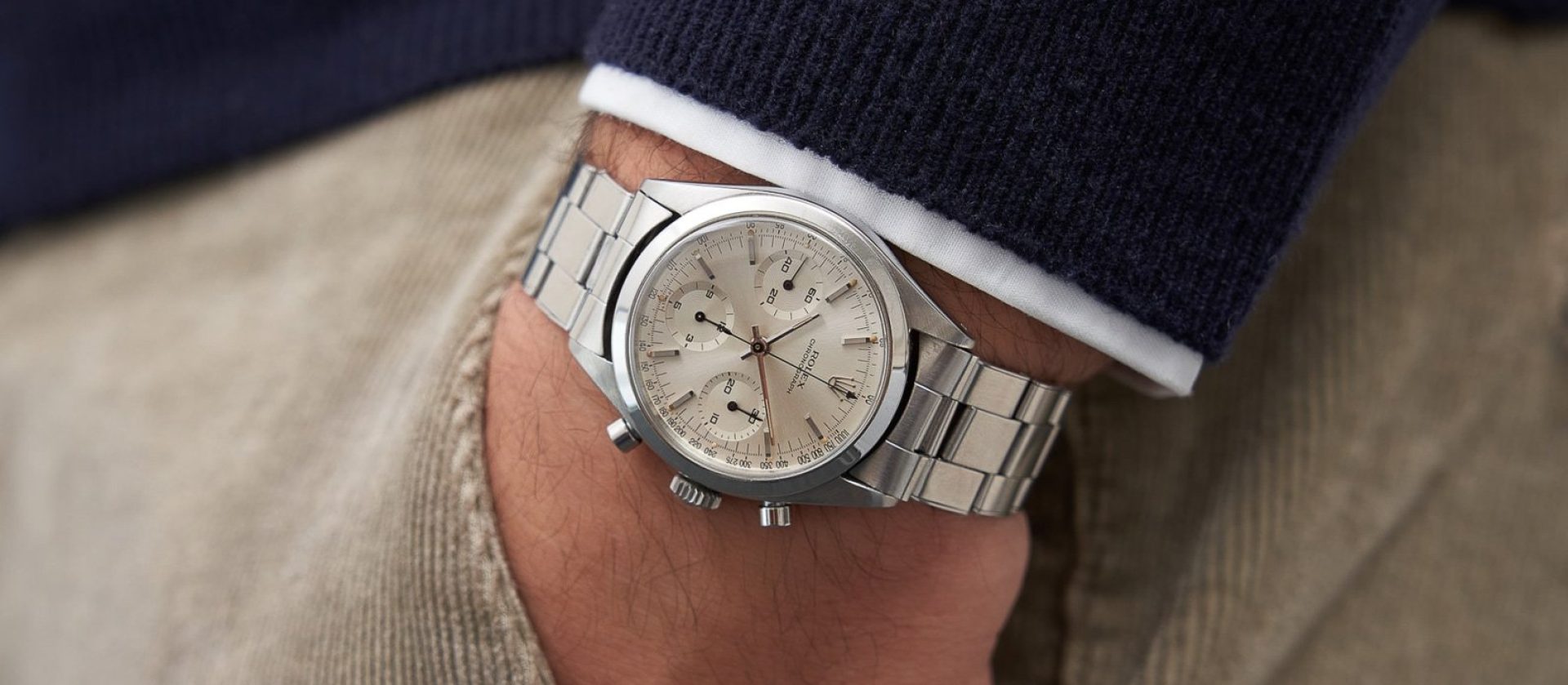
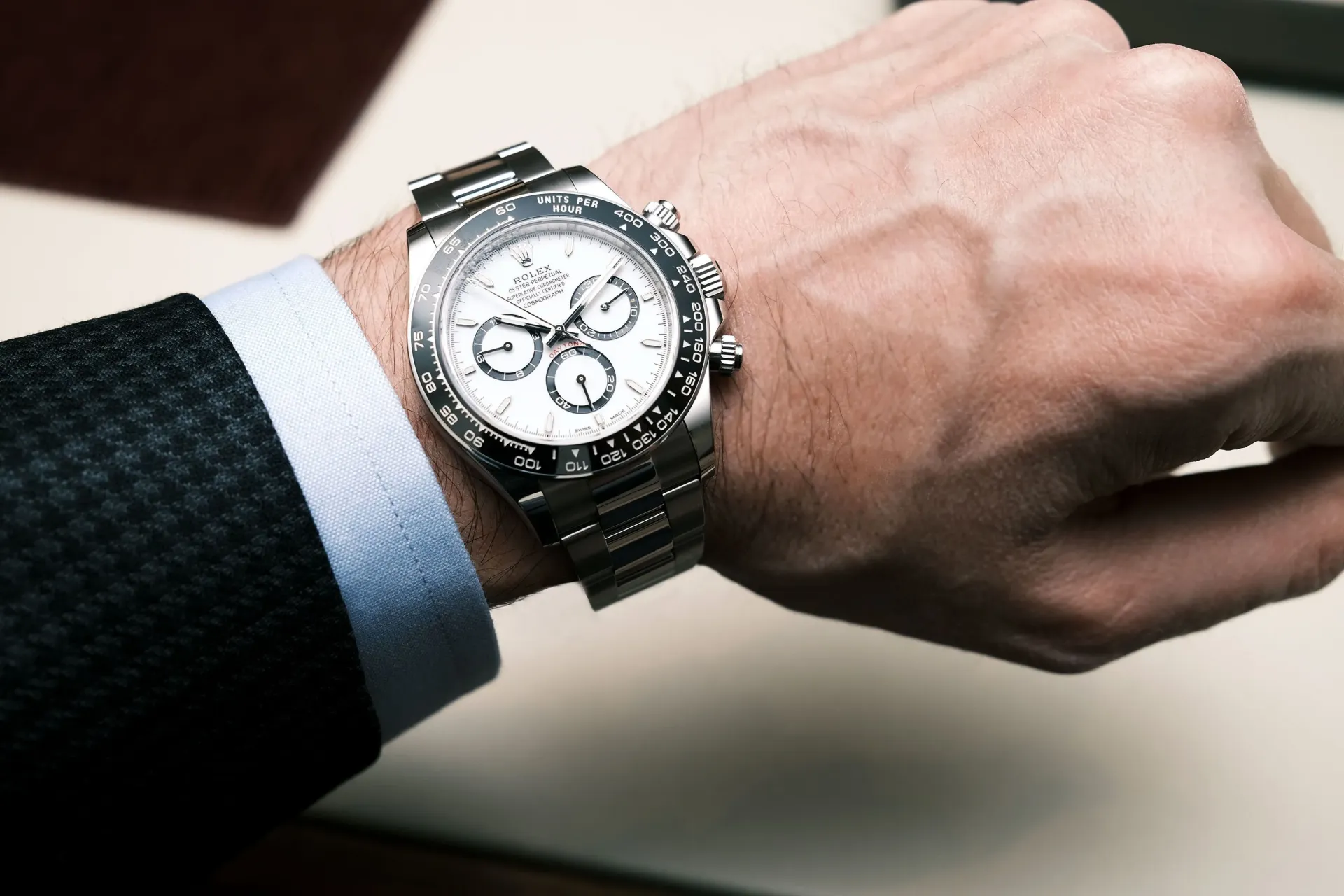
Photographs taken directly from the front can hide these differences. Side-profile images, close views of the lugs and photographs showing the watch on a wrist are more informative.
Buyers should also be cautious when every product description repeats the same material claims without explaining the construction of the individual model. A meaningful description should connect the material to visible features such as finishing, weight, corrosion resistance or bracelet construction.
Finishing Determines Whether a Watch Looks Refined
Finishing is one of the clearest differences between an inexpensive watch and a more carefully produced version.
Good finishing does not simply mean that every surface is highly polished. Luxury sports watches often use a deliberate combination of brushing, polishing and bevelled edges. Each surface should have a purpose.
Brushed surfaces
Brushing should run in a consistent direction. Uneven lines, changing grain patterns or blurred transitions can make a watch look unfinished. Bracelet links should normally follow the same visual direction as the adjoining case surfaces.
Polished surfaces
Polishing should be reflective without appearing rounded or soft. Excessive polishing can distort edges and make the case appear swollen.
Transitions
The boundary between brushed and polished sections is especially important. Clean transitions suggest more controlled machining and finishing. Poor transitions often appear cloudy or irregular under direct light.
For this reason, natural-light photographs are more useful than heavily edited studio images. Bright artificial lighting can hide weak finishing, while daylight reveals uneven brushing, distorted reflections and inconsistent edges.
Crystal Quality Changes the Entire Appearance of the Dial
The crystal is sometimes treated as a minor specification, yet it influences almost everything the wearer sees.
A good crystal should provide clarity without producing distracting distortion. Its height, edge profile and anti-reflective treatment can alter the perceived colour and depth of the dial.
When comparing crystals, buyers should look at:
- Clarity when viewed at an angle
- Colour tint under natural light
- Reflection around the outer edge
- The height of the crystal above the bezel
- Magnification and alignment on watches with a date lens
A date magnifier that is slightly misaligned or positioned too high can be more noticeable than a small difference in the movement. Likewise, overly strong blue anti-reflective coating may make the watch look unusual even when the dial itself is accurate.
Claims of sapphire crystal are useful, but they do not explain the quality of the cut, coating or installation. Buyers should evaluate the complete visual result.
The Dial Should Be Evaluated as a Complete Composition
Collectors often concentrate on one famous detail, such as a logo, coronet or date window. In practice, the overall balance of the dial matters more than a single component.
A well-executed dial should present a coherent relationship between:
- Text size and spacing
- Hour-marker position
- Hand length
- Date-window placement
- Lume colour
- Minute-track alignment
- Dial texture and surface reflection
Small differences become more visible when several are present at the same time. Slightly thick text, short hands and poorly centred markers may each seem minor, but together they change the character of the watch.
Macro photographs can help identify printing and alignment issues, although they should not be the only basis for a decision. A flaw that appears dramatic under extreme magnification may be invisible during ordinary wear. Buyers should balance close inspection with realistic viewing distances.
Sunburst and coloured dials
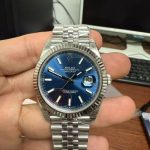
Blue, green and silver sunburst dials are particularly difficult to judge from one photograph. Their appearance changes with lighting and camera angle. Multiple images are necessary to determine whether the colour is balanced or overly bright.
Luminous material
Lume should be compared in daylight as well as darkness. The application should look even, and the daytime colour should suit the design. Brightness alone is not a complete measure of quality.
Hands, Date Wheels and Small Details Require Proportion
Hands are visually simple components, but their length, shape and finish strongly influence the dial.
The minute hand should reach the appropriate track, and the hour hand should maintain the correct relationship with the markers. Polished hands should reflect light cleanly rather than appearing grey or rough.
On date watches, buyers should inspect:
- Number font
- Vertical and horizontal centring
- Date-window depth
- Magnification
- The speed and timing of the date change
Perfect alignment in every photograph is unrealistic because camera position can create optical distortion. However, consistent misalignment across several images is a reasonable concern.
The most persuasive product presentation shows these details honestly rather than hiding them behind distant photographs.
Bezel, Crown and Pushers Reveal Manufacturing Tolerances
Moving components provide information that photographs cannot fully communicate.
A rotating bezel should move consistently and align correctly at its reference point. The action should not feel excessively loose or unusually stiff. On a GMT model, buyers may care about whether the bezel movement matches the expected number of positions, while dive-watch buyers usually prioritise positive engagement and alignment.
The crown should screw down smoothly and engage the movement functions without grinding or excessive resistance. A weak crown tube can turn an otherwise attractive watch into a frustrating daily companion.
Chronograph pushers deserve additional attention. Buyers should understand whether the displayed functions operate as expected and whether using them introduces unnecessary mechanical complexity.
Videos are particularly valuable for these details. A short, unedited demonstration of the crown, bezel and clasp often reveals more than a page of promotional language.
Bracelet and Clasp Quality Define Daily Comfort
The bracelet is one of the most frequently touched parts of a watch. It can also be one of the fastest ways to distinguish careful construction from a lower-cost version.
Important bracelet characteristics include:
- Link articulation
- Sharpness of edges
- Consistency of brushing
- Side-to-side movement
- End-link fit
- Clasp engagement
- Ease of adjustment
A bracelet does not need to be completely silent. Metal links naturally move and produce some sound. The more relevant question is whether the movement feels controlled and whether the bracelet drapes comfortably around the wrist.
End links should meet the case without large or uneven gaps. The clasp should close securely, and any extension system should operate without requiring excessive force.
Buyers should also consider wrist size. A visually accurate bracelet is of little value if it cannot be adjusted comfortably. Confirming the available number of removable links and the micro-adjustment range can prevent disappointment.
Movement Names Should Not Replace Movement Evaluation
Movement terminology is one of the most confusing parts of the replica watch market.
Listings may describe movements as automatic, clone, decorated, Swiss-style or based on a familiar calibre. These terms do not automatically reveal reliability, servicing difficulty or actual construction.
Instead of relying on a label, buyers should ask practical questions:
- Which functions are genuinely operational?
- What is the approximate power reserve?
- How is the time and date adjusted?
- Is the movement commonly serviced?
- Are replacement parts reasonably available?
- Has the movement been used successfully in earlier versions?
Visual similarity versus serviceability
A movement designed to resemble the architecture of a genuine calibre may offer greater visual interest. However, a simpler and more common automatic movement can sometimes be easier to maintain.
Neither approach is automatically superior. The buyer must decide whether visual similarity or practical serviceability matters more.
Timekeeping claims
Precise daily accuracy figures should be treated as a snapshot rather than a lifetime guarantee. Mechanical watches can change after shipping, temperature variation and regular wear. A responsible seller should describe testing procedures without promising impossible perfection.
Water Resistance Should Never Be Assumed
A watch may visually resemble a professional dive model without providing the same water resistance.
Case-back construction, crown seals, crystal installation and gasket quality all affect water protection. Even watches described as tested can change after transport or servicing.
Buyers who plan to expose a watch to water should arrange an appropriate pressure test with a competent watch technician. Visual inspection alone cannot confirm water resistance.
Until a watch has been individually tested, it is sensible to avoid swimming, showering and prolonged water exposure.
Quality Control Is More Valuable Than Promotional Superlatives
Terms such as “perfect,” “identical” and “one-to-one” are common in online listings, but they provide little useful information.
A better seller presentation explains the actual quality-control process. This may include:
- Checking hand and marker alignment
- Testing winding and time-setting functions
- Confirming date operation
- Inspecting bracelet screws and clasp engagement
- Examining the case and crystal for visible damage
- Recording basic movement performance
No manufacturing process produces flawless watches in every batch. Honest quality control is about identifying significant faults and communicating realistic tolerances.
Buyers should be wary of sellers who promise perfection while refusing to provide clear photographs or model-specific information.
Different Watch Types Require Different Priorities
Submariner-style dive watches
Buyers commonly focus on bezel alignment, case proportions, crown guards, bracelet fit and dial colour. Practical reliability is usually more important than decorative movement details.
GMT watches
The operation of the additional hour hand should be understood before ordering. Buyers should confirm how it is adjusted and whether the movement provides the function they expect.
Chronographs
Dial layout and pusher operation matter, but movement complexity also increases. Buyers who rarely use the chronograph should consider whether the additional complication offers meaningful value.
Datejust-style watches
Dial colour, bezel shape, bracelet choice and date magnification usually have the greatest visual impact. Because these watches often use polished surfaces, finishing quality is particularly noticeable.
Integrated-bracelet sports watches
Case thickness and bracelet articulation are central to the wearing experience. A small proportional difference may be more obvious than on a conventional round sports watch.
How to Judge Product Photographs More Carefully
Photographs remain one of the most important sources of information, but buyers should understand how images can be misleading.
A useful product page should ideally include:
- A straight front view
- Both side profiles
- The case back
- The clasp and bracelet
- A close view of the dial
- A date-window image where relevant
- A wrist photograph for scale
Buyers should be cautious when every photograph uses dramatic shadows, heavy colour grading or extremely shallow focus. These techniques may be visually attractive but can conceal finishing and alignment.
Consistency is also important. If different photographs appear to show different dial colours, bracelets or case shapes, the listing may combine images from multiple versions.
Seller Transparency Is Part of Product Quality
A well-made watch can still produce a poor buying experience if the seller provides unclear information or unrealistic promises.
Before ordering, buyers should be able to identify:
- The exact model or reference style
- The movement type
- The expected processing time
- The shipping method
- The return or fault procedure
- The available after-sales support
Clear policies do not guarantee that every transaction will be perfect, but they allow buyers to make an informed decision.
For current collections, model information and practical buying resources, readers can review the replica watches UK selection and compare the available styles before deciding which design best matches their needs.
UK Buyers Should Consider Delivery, Returns and Local Rules
UK customers should look beyond the advertised watch price.
Delivery times, import procedures, return shipping and payment protection can all affect the final experience. Buyers should read the seller’s current policies rather than relying on general promises found elsewhere.
Replica products may also involve intellectual-property, customs or import considerations. Rules and enforcement can vary, so buyers should check the current requirements that apply to their location and avoid presenting any replica product as authentic.
Transparency is essential. A replica watch should always be described and understood as a replica, not as a genuine branded product.
Price Is Useful Only When Compared with Verifiable Details
A higher price does not automatically prove better quality, just as a lower price does not always mean a poor watch.
Price becomes meaningful when it can be connected to identifiable differences:
- More refined case construction
- A different movement
- Improved crystal or dial components
- Stronger quality-control procedures
- Better after-sales support
If two listings use the same photographs and specifications but carry very different prices, buyers should ask what additional value is actually being provided.
The goal is not to find the cheapest option. It is to understand what is being paid for.
A Practical Comparison Checklist
| Area | What to Examine | Common Warning Sign |
|---|---|---|
| Case | Thickness, lugs, crown guards and surface transitions | Rounded edges or visibly incorrect proportions |
| Crystal | Clarity, tint, height and date magnification | Strong distortion or misaligned magnifier |
| Dial | Printing, marker alignment, hand length and lume | Uneven spacing or inconsistent marker placement |
| Bezel | Alignment, movement and insert colour | Loose action or reference point that will not align |
| Bracelet | Link movement, end-link fit and clasp security | Sharp edges, large gaps or weak clasp engagement |
| Movement | Functions, power reserve, setting method and serviceability | Vague movement name with no functional explanation |
| Seller | Real photographs, policies, QC and after-sales support | Only stock images and claims of absolute perfection |
Common Mistakes Buyers Can Avoid
Choosing only by factory name
A factory may perform well with one model and less consistently with another. Version-specific information is more useful than reputation alone.
Assuming the newest version is automatically better
A newer release may improve one detail while introducing another compromise. Buyers should compare actual changes rather than relying on version numbers.
Expecting macro-level perfection
Extreme magnification can reveal differences in almost any watch. Daily-wear appearance, comfort and reliability deserve equal attention.
Ignoring servicing
Every mechanical watch may eventually require maintenance. A buyer should consider whether local service and replacement parts are realistically available.
Believing every specification without evidence
Material and movement claims should be supported by consistent product information, photographs or testing—not simply repeated marketing language.
Frequently Asked Questions
What is the most important sign of a good replica watch?
There is no single sign. The strongest watches combine correct proportions, controlled finishing, a stable movement, a comfortable bracelet and transparent product information.
Is a clone movement always better?
No. A clone-style movement may provide greater visual or functional similarity, while a simpler movement may be easier to service. The better choice depends on the buyer’s priorities.
Does 904L steel guarantee high quality?
No. Steel grade is only one part of the watch. Machining, polishing, brushing, proportions and assembly can matter just as much.
Can product photographs prove water resistance?
No. Water resistance requires appropriate testing. It should not be assumed from appearance or model type.
Should buyers choose the most expensive version?
Not automatically. Buyers should identify what measurable improvements justify the price difference and whether those improvements matter to them.
How many photographs should a useful listing provide?
There is no fixed number, but buyers should be able to see the dial, case profiles, bracelet, clasp, case back and key functional details clearly.
Final Thoughts
The most informed UK buyers do not judge replica watches by one marketing term, one photograph or one factory name.
They compare the watch as a complete object: how its proportions work together, how its moving components feel, how the movement suits its intended purpose and how clearly the seller communicates its strengths and limitations.
This approach takes more time, but it produces better decisions. It also shifts attention away from exaggerated claims and toward details that genuinely affect ownership.
A watch does not need to be presented as perfect to be enjoyable. It needs to be accurately described, reasonably constructed and suitable for the buyer’s expectations.
In 2026, thoughtful comparison remains the most reliable way to distinguish attractive marketing from meaningful quality.