
Evaluating a replica watch is rarely about finding one specification that proves whether a listing is good or bad.The more useful approach is to look at several details together: case proportions, dial execution, bezel and crystal,bracelet construction, movement information, and the quality of the evidence provided by the seller.
Marketing descriptions often use terms such as “1:1”, “super clone”, “Swiss movement”, or “high grade”.These labels may describe how a product is being positioned, but they do not by themselves establish what is actually present in the watch. A more careful evaluation separates observable details from claims and considers how each difference affects the way the watch looks, wears,operates, or may need attention over time.
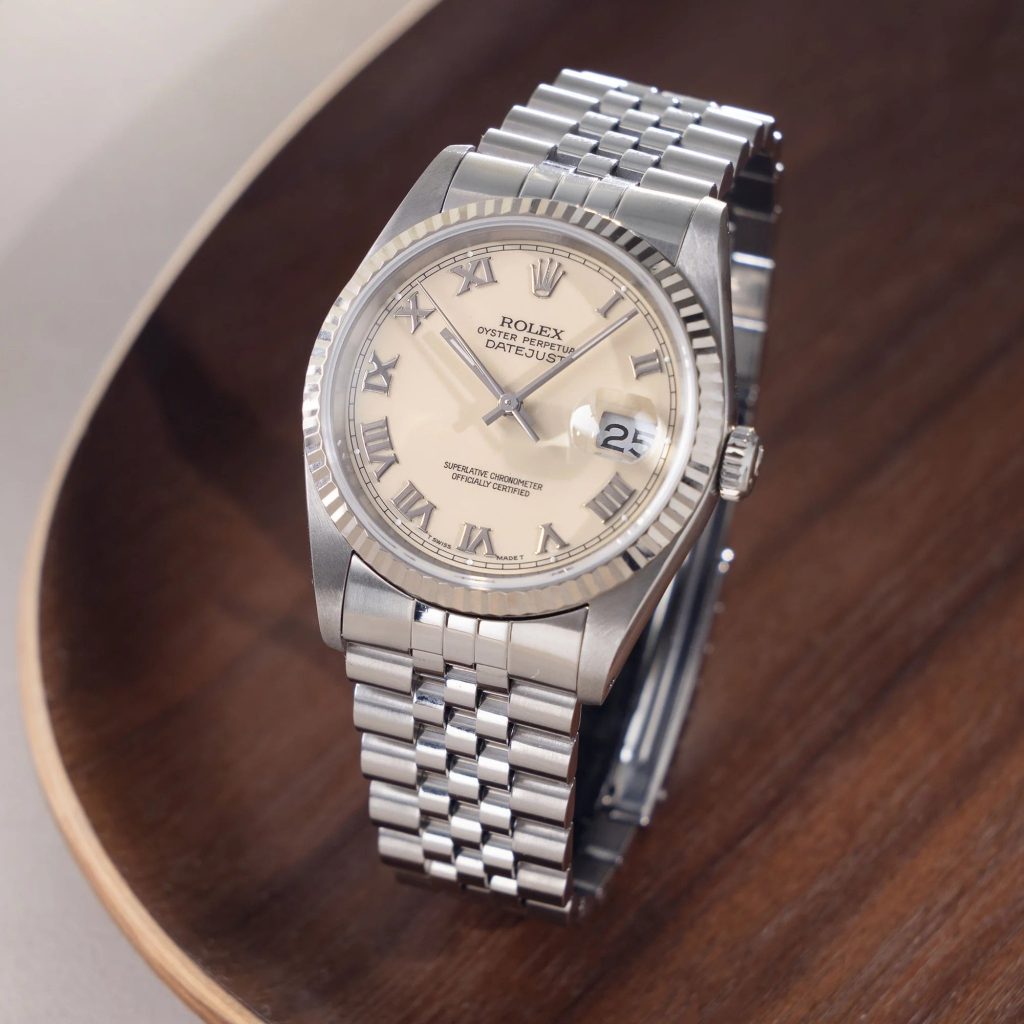
What Actually Matters When Evaluating a Replica Watch?
Not every difference between two watches has the same practical importance. A small variation in a hidden component may have little effect on everyday use, while an incorrect case proportion can be immediately noticeable from across a room.
A useful evaluation therefore starts by separating quality into four broad areas:
- Visual accuracy: how closely the visible design elements reproduce the proportions and finishing of the reference style.
- Wearability: how the case, bracelet and clasp behave on the wrist during normal use.
- Mechanical information: what is actually known about the movement and its operating characteristics.
- Evidence quality: how much of the product information can be supported by photographs, measurements or clearly stated specifications.
This framework is more useful than relying on a single grade or factory label because it explains why one difference matters more than another.
1. Start With Case Proportions Rather Than Marketing Labels
The case is one of the strongest contributors to the visual identity of a watch. Even when the dial graphics are close to the reference design, incorrect proportions can change the overall appearance significantly.
Look at the relationship between the case diameter, thickness, lug shape, crown position and bezel. These elements should be considered together rather than individually.
Case diameter is only one measurement
Two watches can have the same advertised diameter and still wear very differently. Lug-to-lug distance, case thickness and the shape of the case sides can alter the footprint on the wrist.
This is particularly relevant when comparing sport-oriented models with more traditional designs. A diver-inspired watch may naturally have a larger visual presence because of its bezel and protective case structure, while a Datejust-style watch can appear more compact even at a similar diameter.
Why proportions often matter more than tiny finishing differences
A slightly different brushing pattern may only become obvious under close inspection. Incorrect proportions, however,can influence the silhouette every time the watch is worn.
For that reason, case geometry should normally receive more attention than small decorative details that are difficult to see during normal use.
2. Examine the Dial as a Complete System
A dial should not be evaluated simply by asking whether the text and markers are present. Spacing, alignment, surface finishing and the relationship between the different elements all contribute to the result.
Markers and spacing
Hour markers should appear consistently positioned around the dial. Uneven spacing can sometimes be more noticeable than a small difference in colour.
Pay attention to the relationship between the applied markers, minute track and central hands. When these components are visually balanced, the dial tends to look convincing even before individual details are inspected.
Date windows and cyclops-style magnification
On models featuring a date display, the date window deserves particular attention. Its position relative to the surrounding dial elements is important, as is the apparent magnification through the crystal.
A photograph can reveal the placement and appearance of the date window, but it cannot necessarily prove the optical performance of the crystal under different lighting conditions. That distinction is important when evaluating product listings.
Dial colour can be difficult to judge online
Dial colour is affected by photography, lighting, white balance and post-processing. A blue, grey or green dial can appear substantially different in two photographs without the physical watch necessarily being different.
When colour is an important buying factor, consistent photographs taken under comparable lighting are more useful than a single heavily edited product image.
3. Look at the Bezel, Crystal and Small Exterior Details
The bezel and crystal form a visual transition between the dial and the case. Their proportions can therefore influence the entire face of the watch.
On a rotating-bezel sport design, examine the relationship between the bezel markings and the dial. Alignment is particularly important because even a small visual offset can become obvious when viewed from above.
On a simpler bezel, the shape of the bezel edge and its relationship with the crystal may be more important than the presence of decorative markings.
The same principle applies to the crown and crown guards. These components should not be judged in isolation. Their size,position and relationship to the case determine whether the side profile feels balanced.
4. Bracelet Construction Can Change the Entire Wearing Experience
The bracelet is often overlooked because product photographs naturally focus on the dial. In everyday use, however, the bracelet and clasp can have as much influence on comfort as the case itself.
Consider articulation and flexibility
Bracelet links should move naturally rather than feeling excessively stiff or loose. The way the bracelet follows the wrist is more meaningful than simply counting the number of links shown in a photograph.
Clasp construction matters
The clasp is one of the areas where practical differences can become obvious. Look at the overall construction, finishing,closure mechanism and adjustment options.
A bracelet that looks excellent in photographs may still be less comfortable if its adjustment range does not suit the wearer’s wrist. Conversely, a small cosmetic difference may be irrelevant if the bracelet fits securely and comfortably.
Bracelet quality should be judged in context
A heavier bracelet is not automatically a better bracelet. Weight can come from different construction choices, and a heavier bracelet may not necessarily provide a better fit.
The more useful question is whether the bracelet provides the combination of flexibility, adjustment, finishing and comfort that matches the intended use of the watch.
5. Movement Information Requires More Caution
Movement descriptions are one of the easiest parts of a watch listing to misunderstand because technical terminology is frequently used as a selling point.
A movement code printed in a listing should therefore be treated as product information rather than automatic proof of mechanical quality.
What can reasonably be evaluated?
Useful information can include the stated movement family, operating functions, visible hand behaviour, date mechanism,winding behaviour and any clearly documented specifications.
What cannot normally be established from a product page alone is long-term reliability, service history, accuracy over an extended period, or the exact internal configuration of a movement.
This distinction becomes especially important when listings use phrases such as “Swiss”, “clone”, “super clone” or “1:1”.Such terminology should not replace actual evidence.
Movement choice should follow the intended use
Someone primarily interested in appearance may place greater value on case and dial execution. Someone who wears a watch regularly may care more about operating behaviour, ease of maintenance and the availability of appropriate service.
There is therefore no universal movement choice that makes sense for every buyer. The appropriate priority depends on how the watch is expected to be used.
6. Learn to Separate Evidence From Claims
One of the most useful skills when comparing online watch listings is distinguishing between three different types of information.
| Information type | Example | How to treat it |
|---|---|---|
| Visible evidence | Case shape, dial layout, bracelet appearance and photographed details | Can be directly evaluated from suitable images |
| Stated specification | Advertised diameter, thickness or movement description | Useful, but should be treated as the seller’s stated information |
| Marketing claim | “1:1”, “best grade”, “super clone” or similar labels | Should not be treated as independent proof |
This simple distinction prevents a common mistake: treating every sentence on a product page as equally reliable evidence.
High-quality evaluation does not require assuming that every seller is inaccurate. It simply means keeping the strength of the conclusion proportional to the strength of the evidence.
7. Compare Watches by Priority, Not by a Single “Grade”
Two listings may both be described as high quality while offering different strengths. One may have more convincing case proportions, another may offer a more attractive bracelet, while a third may provide clearer movement information.
A practical comparison should therefore start with the buyer’s priorities.
| Priority | Details to examine | Why it matters |
|---|---|---|
| Appearance | Case proportions, dial layout, bezel and finishing | These elements define the overall visual impression |
| Comfort | Case thickness, lug shape, bracelet articulation and adjustment | Small differences can become noticeable during extended wear |
| Function | Date operation, chronograph functions or additional-hour displays | More complicated functions create more areas to evaluate |
| Maintenance | Movement information, construction and available service considerations | Regular wear makes long-term practicality more relevant |
| Confidence | Quality of photographs and clarity of stated specifications | Better evidence reduces uncertainty before making a decision |
8. Different Watch Designs Require Different Evaluation Priorities
The same checklist does not have to be applied with equal weight to every watch style. The most important details depend partly on the design being evaluated.
Submariner-style designs
Dive-inspired watches place greater visual emphasis on the bezel, case profile, crown guards and bracelet. Bezel alignment and the relationship between the bezel, crystal and dial deserve particular attention.
Datejust-style designs
On a Datejust-style design, dial finishing, date-window placement, bezel shape and bracelet integration can have a stronger effect on the overall appearance.
Daytona-style chronographs
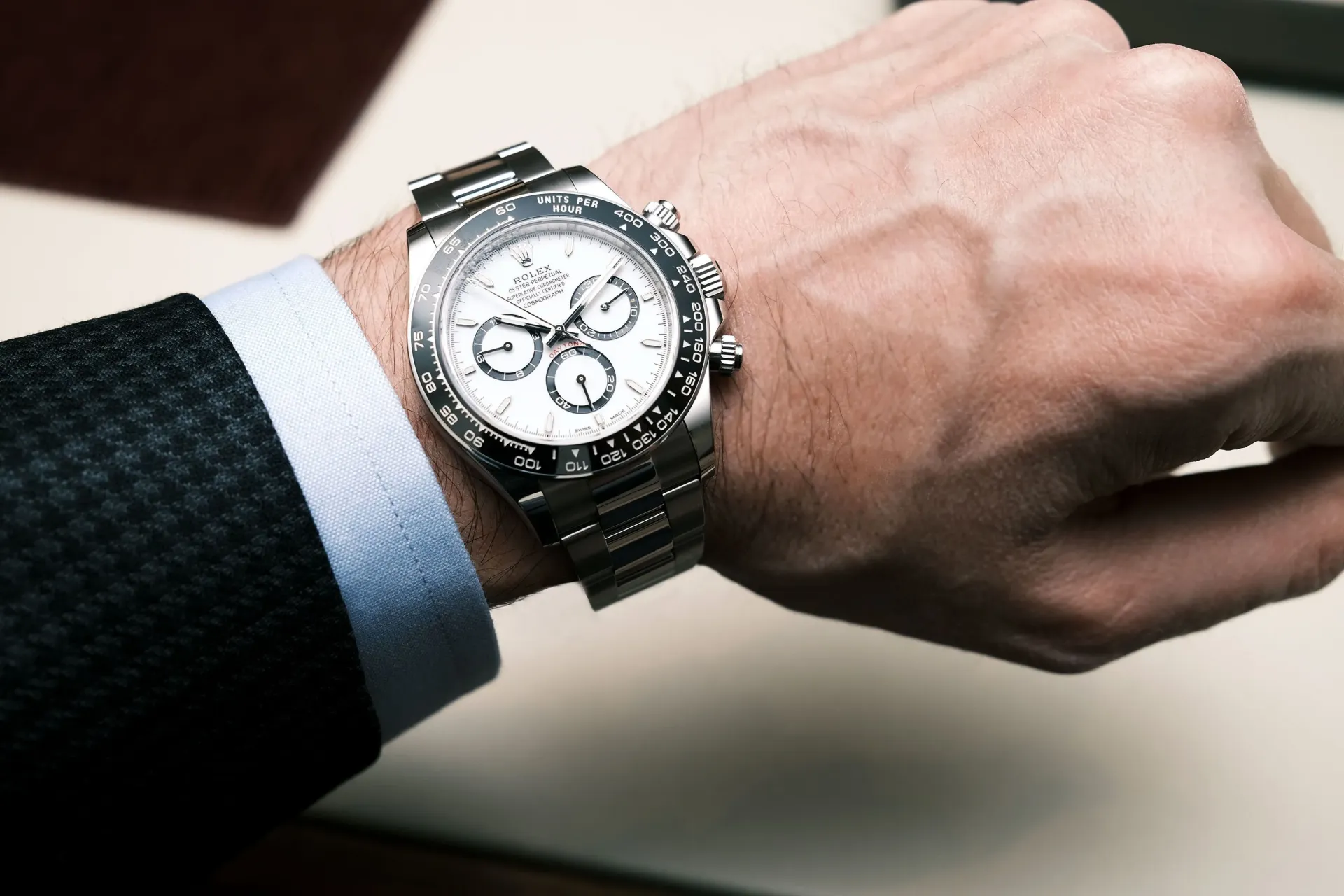
Chronograph designs introduce additional visual and functional elements. Sub-dial spacing, hand alignment, pushers and the relationship between the sub-dials and the main dial become more important.
GMT and travel-oriented designs
GMT-style watches add another layer of evaluation because the additional hour display and bezel interact with the primary time display. The functionality should be considered separately from the visual appearance.
This is why a single “quality grade” is often less informative than a model-specific evaluation.
9. A Better Way to Compare Two Listings
Suppose two watches are being considered at a similar advertised price. Instead of asking which one has the higher marketing grade, compare the areas that actually influence the intended use.
- Compare the case first.
Check diameter, thickness, lug shape and overall proportions. - Compare the dial.
Look at marker spacing, typography, date placement and surface appearance. - Review the bracelet and clasp.
Consider articulation, finishing, adjustment and expected comfort. - Evaluate movement information separately.
Record what is stated without automatically treating the description as independently verified. - Assess the evidence.
Give greater weight to clear photographs and specific information than to broad quality claims. - Decide according to priorities.
The better choice is the one whose strengths correspond to the reason the watch is being considered.
This approach produces a more useful conclusion than simply declaring one listing “better”. It explains which differences matter and which differences may not justify additional cost or attention.
10. What Should You Actually Pay More Attention To?
When time is limited, not every detail deserves equal investigation. A practical priority order is often more useful.
- Case proportions and overall silhouette
- Dial layout and major visual details
- Bracelet and clasp construction
- Functional components relevant to the model
- Movement information and maintenance considerations
- Minor finishing details visible only under close inspection
This does not mean small finishing details are unimportant. It means they should be considered in proportion to their
practical impact.
If a difference cannot be seen during normal wear and has no meaningful effect on operation or comfort, it may deserve less attention than a case or bracelet difference that is immediately noticeable.
11. Why Product Photography Matters So Much
Online watch evaluation depends heavily on photography. Unfortunately, photographs can both reveal and conceal information.
A useful image should make it possible to examine the case shape, dial, bracelet and other relevant components without excessive editing or distortion.
Multiple viewing angles are particularly valuable. A straight-on photograph may show the dial well but reveal little about case thickness or crown position. A side view provides different information, while a bracelet photograph can help with construction and clasp details.
Images should therefore be treated as evidence with limitations rather than absolute proof. Lighting, lens distortion and photography angle can all change how a watch appears.
12. A Practical Evaluation Record
When comparing several watches, writing down the important observations can prevent marketing language from influencing the final decision too strongly.
| Area | Observation | Confidence |
|---|---|---|
| Case | Dimensions, proportions and visible finishing | High / Medium / Low |
| Dial | Markers, typography, date position and colour | High / Medium / Low |
| Bezel | Shape, alignment and relationship with the dial | High / Medium / Low |
| Bracelet | Links, articulation, clasp and adjustment | High / Medium / Low |
| Movement | Advertised movement and available functional information | High / Medium / Low |
| Evidence | Quality and consistency of photographs and specifications | High / Medium / Low |
The confidence column is particularly useful. It prevents a highly polished photograph or confident product description from being mistaken for independently confirmed information.
Common Evaluation Mistakes
Relying entirely on a grade
Terms such as “AAA”, “1:1” and “super clone” may be useful for understanding how a listing is marketed, but they do not provide a standardized technical measurement that can replace direct evaluation.
Assuming a movement name proves performance
A movement description does not automatically establish long-term accuracy, reliability or service condition. Those conclusions require stronger evidence than a product-page specification.
Focusing on microscopic details first
Collectors can easily become focused on tiny details while overlooking larger differences in case proportions, bracelet fit or dial balance. Start with the features that have the greatest visual and practical impact.
Assuming a higher price guarantees a better result
Price can reflect many factors beyond the actual differences in construction or finishing. A higher advertised price should therefore be evaluated against identifiable improvements rather than accepted as proof of quality.
Treating every photograph as independent evidence
Product images can be reused, edited or photographed under conditions that make comparison difficult. Consistency and specificity are more valuable than simply having a large number of images.
Frequently Asked Questions
What is the most important part of a replica watch to evaluate?
There is no single universal answer, but case proportions, dial execution and bracelet construction usually have a strong influence on the overall result. Movement information becomes more important when the watch is intended for regular use.
Can photographs prove the exact movement inside a watch?
Usually not. Photographs may provide useful clues, but a product image and a movement description should not be treated as independent confirmation of the exact internal configuration.
Is a “1:1” label enough to identify a high-quality watch?
No. “1:1” is a marketing description rather than a universal technical standard. The underlying case, dial, bracelet,movement information and available evidence should still be evaluated separately.
Should price be the main factor when comparing two watches?
Price is useful for establishing the overall value proposition, but it should be compared with identifiable differences.A higher price is more meaningful when the additional cost corresponds to improvements that matter to the intended use.
Are small visual differences always important?
No. Their importance depends on visibility and practical impact. A small difference that is only visible under close inspection may matter less than an obvious difference in case proportions,bracelet fit or dial balance.
Final Takeaway
Evaluating replica watches properly is less about finding the right marketing label and more about understanding the relationship between visible design, construction, function and evidence.
Start with the case and overall proportions. Move to the dial, bezel and bracelet. Then consider the movement and the practical requirements of the intended use. Finally, separate what can be observed directly from what is simply stated in a product description.
This method also makes comparisons more meaningful. Instead of asking whether one watch is simply “better”, ask which differences are actually relevant to appearance, comfort, function and long-term practicality.
For readers researching different watch styles and comparing the broader range of replica watches available to UK buyers,the main ShopReplica UK watch collection provides a useful starting point for continuing that research.
The most reliable evaluation is ultimately the one that keeps its conclusions proportional to the available evidence.Clear photographs, specific information and realistic expectations are more useful than a collection of impressive-sounding labels.